



Description
TLC Zoom
Wednesday 12th February 2025 @ 18:00 GMT
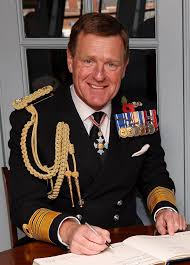
Admiral Sir Ben Key KCB CBE ADC
The Strategic Defence Review – outcomes and next steps
It is a huge pleasure and privilege to get the view from the top in the form of the First Sea Lord (1SL) (and a TLC member too). Sir Ben last presented to TLC in June 2022 when his subject was The Integrated Review: Turning ambition into reality. His presentation today could not be more timely.
It is worth reminding ourselves of the announcement made on 17th July 2024. By the way, you will have noted that TLC member General Sir Richard Barrons is one of the 3 official reviewers (see 8 below)
Background
1. The UK faces threats that are growing and diversifying: war in Europe; conflict in the Middle East; states across the world that are increasingly acting in ways that challenge regional and global stability as well as our values and interests; terrorist groups; hybrid attacks; and instability caused by climate change.
2. Therefore, on 16 July 2024, the Prime Minister launched a Strategic Defence Review (SDR) to ensure the United Kingdom is both secure at home and strong abroad – now and for the years to come.
Purpose
3. The SDR will determine the roles, capabilities and reforms required by UK Defence to meet the challenges, threats and opportunities of the twenty-first century, deliverable and affordable within the resources available to Defence within the trajectory to 2.5%. The Review will ensure that Defence is central both to the security, and to the economic growth and prosperity, of the United Kingdom.
Scope
4. The SDR will consider all aspects of Defence, involving and receiving inputs from other Government Departments, agencies and industry, in areas where they support UK Defence. Other areas of national security policy are outside the scope of the Review.
5. The following themes cover the key issues the review should consider. The Reviewers will have discretion to consider other issues that arise during the course of the review.
- The strategic and operational context, including the threat picture and the current baseline state of UK Defence.
- The major features of the force structure needed to create the necessary integrated multi-domain Defence capability of the future.
- The opportunities for modernisation and transformation, and greater productivity, including through the rapid and consistent application of Digital Age technologies.
- The UK’s international partnerships and alliances, and how these can be strengthened in the cause of collective security and deterrence.
- The approach to be taken to acquisition and support in order to deliver the required capabilities in a timely way, and how to secure the best possible value for money and rapidly changing technology.
- The approach to recruiting, educating, training and retaining the people needed for One Defence, including Regular, Reserve, Civil Service and industry. This is to include how Service life can be improved for those who commit to serve their country in uniform.
- The Defence Estate including how it can be modernised and streamlined to support both defence outputs and wider HMG objectives on housebuilding and net zero.
- The state of the defence technological and industrial base, and the contribution of Defence to the government’s Growth Mission.
6. The Review will identify where reprioritisation of roles, capabilities, activities, and support may be made in the current Defence programme, to allow new investment, achieve better value for money, and secure greater economic gain for the UK, and will make recommendations.
7. The Review will be conducted with the following parameters in place:
- The Government has a total commitment to the independent UK nuclear deterrent. The SDR will consider the efficiency and effectiveness of the nuclear programme.
- NATO will remain the cornerstone of UK Defence. The SDR will look at enhancing the UK’s contribution to the Alliance and sustaining a “NATO first” defence policy, while protecting vital UK sovereign requirements and strategic reach.
- The first duty of Government is to keep the country safe and protect its citizens. The SDR will examine the Defence capabilities and options to reinforce UK homeland security.
- The United Kingdom’s support for Ukraine is steadfast and will endure for as long as it takes for Ukraine to succeed. The SDR will consider ways in which this support can be maintained in the short, medium and long term.
- All Defence personnel – in and out of uniform – are at the heart of Defence’s plans.
- The SDR will identify ways to maintain the UK’s defence ties to the Indo Pacific region, the Gulf and the Middle East. The UK is committed to the delivery of the AUKUS partnership with the US and Australia.
- Within these parameters, the Review will consider the need for prioritisation of objectives, and therefore investments and activity, to set out a deliverable and affordable plan for Defence.
- As set out in the Labour Party’s Manifesto, the Government “will set out the path to spending 2.5 per cent of GDP on defence.” This will be dealt with at a future fiscal event.
Arrangements for the Review
8. The Prime Minister has commissioned the Defence Secretary to oversee the Review, which will be headed by three external Reviewers. The lead Reviewer will be Lord Robertson of Port Ellen, with General Sir Richard Barrons and Dr Fiona Hill CMG as the other two Reviewers.
9. The Reviewers will select a small Defence Review Team (DRT) to support their work. The DRT will comprise senior experts from inside and outside Defence, working closely with other Government Departments, notably HM Treasury.
10. The SDR will be supported by a dedicated Secretariat provided by the Ministry of Defence, within the Main Building in London. The Ministry of Defence will support the Reviewers with full transparency and candour; the SDR will be the Department’s top priority after operations.
11. The Reviewers will consult widely, including with Parliament, the Defence community, academia, and industry. Allies will be engaged regularly to seek their views. The Reviewers will call for concise contributions, which will then be subject to a review and challenge process.
12. The Reviewers will report regularly on progress to the Prime Minister, the Chancellor of the Exchequer and Secretary of State for Defence and will make their final report to the Prime Minister, the Chancellor and the Defence Secretary – with recommendations – in the first half of 2025.
13. The Secretary of State for Defence will subsequently report the SDR to Parliament.
First Sea Lord and Chief of Naval Staff
Admiral Sir Ben Key KCB CBE ADC
Biography
Educated at Bromsgrove School, Ben Key joined the Royal Navy in 1984 as a University Cadet, subsequently graduating in Physics from Royal Holloway, University of London. He qualified as both helicopter aircrew and as a Principal Warfare Officer and as a junior officer saw service around the world in a variety of frigates and destroyers.
He has been privileged to command four ships: the mine hunter HMS SANDOWN, the frigates HMS IRON DUKE and HMS LANCASTER, and the aircraft carrier HMS ILLUSTRIOUS.
Shore appointments have included Resources and Plans in MOD, an advisor to the Iraqi Director Joint Staff in Baghdad, the UK’s Permanent Joint HQ, and HQ Air Command. He has also served as Principal Staff Officer to the Chief of Defence Staff. From April 2013 to July 2015 he was Flag Officer Sea Training, responsible for recruiting as well as individual and operational training across the Royal Navy.
Promoted to Vice Admiral in February 2016, he was the Royal Navy’s Fleet Commander from then until March 2019. He then served as the Chief of Joint Operations, prior to his appointment as First Sea Lord in November 2021. He was awarded the US Bronze Star in 2006 for his service in Baghdad, appointed CBE in 2016 and KCB in 2021.
Ben and his wife Elly have 3 children and make their home in Dorset. He is a governor of a school founded by his grandmother, and holds Honorary Degrees from his old university and the University of Plymouth. A Freeman of the City of London and a Younger Brother of Trinity House, he holds a Diploma from the Institute of Directors and is an alumnus of the London Business School. Now much better at talking about sport than actually playing any, he is President of a number of Royal Navy and UK Armed Forces sports.